Introduction
Facebook is a social media platform that has revolutionized how people connect, communicate, and share information across the globe. Since its launch in 2004, it has undergone a remarkable transformation—from a niche college networking site to one of the world’s largest digital ecosystems. With billions of users, Facebook has played a significant role in reshaping communication, marketing, media, and even politics.
In this article, we’ll explore what Facebook is, how it started, and how it has evolved over the years, including key milestones, technological developments, controversies, and its broader impact on society. We’ll also look at a real-world example to illustrate this evolution in action.
What Is Facebook?
Facebook is a social networking service where users can create personal profiles, connect with friends, share multimedia content, and interact with individuals, groups, and businesses. Its core features include:
- Personal Timelines or Profiles: Where users display their posts, photos, and life events.
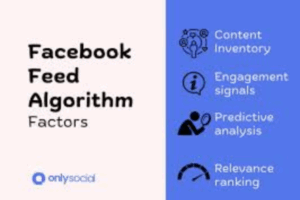
- News Feed: A constantly updating list of friends’ and Pages’ posts.
- Friends and Followers: Options to connect with others or follow public profiles.
- Messenger: A separate messaging app for chatting in real-time.
- Groups and Pages: Tools for community building and business engagement.
- Marketplace: A platform for buying and selling items locally.
- Reels and Stories: Short-form video and photo sharing options.
Owned by Meta Platforms, Inc. (formerly Facebook, Inc.), the platform remains a critical part of the social media landscape despite the rise of newer competitors like TikTok and Snapchat.
The Birth of Facebook: 2004
Facebook was created by Mark Zuckerberg along with his college roommates at Harvard University. Originally called “TheFacebook”, it launched on February 4, 2004, as an exclusive network for Harvard students. Its goal was to help students connect online using real identities.
Within months, the platform expanded to other Ivy League universities and later to colleges across the United States and Canada. By 2006, Facebook became available to anyone aged 13 and older with a valid email address, marking a significant turning point in its public adoption.
Facebook’s Key Milestones and Evolution
1. Expansion and Growth (2006–2010)
- News Feed Launch (2006): The introduction of News Feed revolutionized how users consumed content, displaying updates from friends in real time. Though initially met with resistance over privacy concerns, it quickly became the core of the platform.
- Facebook Platform (2007): Developers were allowed to build third-party apps, leading to viral games like FarmVille, which attracted millions of users and kept them engaged for hours.
- Global Reach: By 2008, Facebook overtook MySpace as the most popular social network in the world. It also launched in multiple languages to support global expansion.
- “Like” Button (2009): A simple but powerful feature that increased user interaction and became a universal symbol of digital approval.
2. The Mobile Era and IPO (2011–2015)
- Mobile App Development: As smartphones took over, Facebook invested heavily in mobile apps, ensuring users could stay connected on the go.
- Acquisition of Instagram (2012): In a strategic move, Facebook bought photo-sharing platform Instagram for $1 billion. At the time, Instagram had only 30 million users, but its integration helped Facebook dominate visual social media.
- Facebook Messenger (2011–2014): Initially a part of the Facebook app, Messenger was spun off into a separate app, allowing users to chat, make video calls, and send payments.
- IPO (2012): Facebook went public, raising $16 billion and achieving a valuation of over $100 billion—one of the largest tech IPOs in history.
3. Diversification and Data Concerns (2016–2018)
- Acquisition of WhatsApp and Oculus (2014): Facebook acquired WhatsApp for $19 billion and Oculus VR for $2 billion, signaling its interest in messaging and virtual reality.
- Facebook Live (2016): The launch of live video streaming allowed users and brands to broadcast in real-time, leading to new forms of content consumption.
- Cambridge Analytica Scandal (2018): One of Facebook’s most significant controversies, this data breach affected over 87 million users and sparked global debates on privacy, ethics, and misinformation.
4. Rebranding and the Metaverse (2019–Present)
- Focus on Groups and Communities: Facebook began shifting its strategy to promote meaningful interactions, focusing on Groups, Events, and smaller communities.
- Reels (2021): A direct response to TikTok, Reels offered users short-form, vertical video formats with editing tools and music.
- Meta Rebrand (2021): Facebook Inc. rebranded to Meta Platforms, Inc. to reflect a new focus on building the metaverse—a virtual reality-based future internet. Facebook, as a product, remained a major part of the Meta ecosystem.
- AI and Algorithm Enhancements: Facebook uses AI to manage content recommendations, detect hate speech, and personalize user experiences, though these systems have sparked criticism for amplifying polarization.
Real-World Example: The Arab Spring and Facebook’s Role
A significant example of Facebook’s societal impact is its role during the Arab Spring uprisings (2010–2012). Protesters in countries like Egypt, Tunisia, and Libya used Facebook to organize rallies, share videos of government abuses, and communicate across borders. The platform enabled activists to spread their messages rapidly without relying on state-controlled media.
In Egypt, a Facebook page titled “We Are All Khaled Said” helped spark widespread protests that eventually led to the resignation of President Hosni Mubarak. This example demonstrates how Facebook evolved from a social app into a powerful tool for social and political mobilization.
However, the same features that empowered activists have also been used to spread propaganda and misinformation in other contexts. This duality highlights both the promise and the peril of Facebook’s influence.
Challenges and Criticisms
Despite its success, Facebook has faced numerous criticisms:
- Privacy Violations: Data collection practices have been a frequent point of controversy.
- Mental Health Concerns: Studies suggest that excessive use, especially among teens, may contribute to anxiety, depression, and social comparison.
- Fake News and Algorithmic Bias: Facebook’s algorithms have been accused of promoting sensational or false content for engagement.
- Market Dominance: Regulators have scrutinized Facebook’s acquisitions and data practices as potentially anti-competitive.
These challenges have forced Facebook to introduce changes, such as privacy controls, content moderation tools, and partnerships with fact-checkers.
Facebook in 2025: Where Is It Now?
As of 2025, Facebook remains a major social network with over 2.9 billion monthly active users. While its growth has plateaued in some Western markets, it continues to expand in regions like Africa, Asia, and Latin America.
Its role has evolved in multiple ways:
- Business Tool: Facebook is essential for small and medium-sized enterprises (SMEs) to advertise, engage with customers, and sell products.
- Content Creation Platform: Creators now use Facebook to publish videos, host live events, and monetize through ads or fan subscriptions.
- Crisis Communication: Governments and NGOs use Facebook to distribute information during emergencies, health crises, and natural disasters.
Through initiatives like Facebook Marketplace, Facebook Dating, and Facebook Gaming, the platform continues to diversify its offerings.
Conclusion
Facebook has come a long way since its modest beginnings in a Harvard dorm room. Its evolution reflects broader trends in technology, media, and society. From a simple platform for college students to a global force shaping communication, culture, and commerce, Facebook’s impact is undeniable.
While it faces challenges from newer platforms and growing regulation, Facebook remains a dominant player in the social media industry. Its integration with Meta’s broader vision for the metaverse could define its future, but its legacy as a pioneer of social networking is already firmly established.
As technology and user behavior continue to evolve, so too will Facebook—whether as a standalone platform or as part of a broader digital ecosystem under Meta’s leadership.