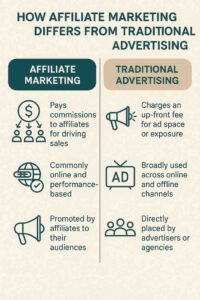
Affiliate marketing, a performance-based strategy where individuals or businesses earn commissions by promoting products or services through unique tracking links, has evolved into a dynamic industry valued at over $16 billion globally in 2025. Its low entry barriers, flexibility, and potential for passive income make it an attractive career option for diverse professionals, from content creators to marketers and entrepreneurs. Affiliate marketing offers a range of career paths, allowing individuals to leverage their skills in content creation, digital marketing, data analysis, or business management to build sustainable careers. These paths vary in scope, responsibility, and income potential, catering to both beginners and seasoned professionals. This comprehensive explanation, spanning at least 1,200 words, will explore the primary career paths available through affiliate marketing, their requirements, benefits, and challenges, and provide a practical example to illustrate one such path in action.
Understanding Career Paths in Affiliate Marketing
A career path in affiliate marketing involves leveraging the ecosystem of promoting products or services to earn commissions, typically through blogs, social media, email, or paid ads. Unlike traditional jobs, affiliate marketing careers are often entrepreneurial, offering flexibility in work hours, location, and income potential. Key characteristics include:
- Performance-Based Earnings: Income depends on conversions (e.g., sales, leads), not fixed salaries.
- Skill-Driven Roles: Success requires skills in content creation, SEO, analytics, or advertising, which can be self-taught or professionally developed.
- Scalability: Careers can start as side hustles and grow into full-time businesses or specialized roles within larger organizations.
- Diverse Opportunities: Roles range from solo affiliates to agency managers or software developers serving the industry.
In 2025, advancements in AI tools (e.g., ChatGPT, SEMrush), mobile traffic (55% of web visits), and affiliate platforms (e.g., CJ Affiliate, ShareASale) have expanded career opportunities, making affiliate marketing accessible to individuals with varied backgrounds.
Primary Career Paths in Affiliate Marketing
Affiliate marketing offers several distinct career paths, each with unique responsibilities, skill requirements, and income potential. Below are the key paths:
1. Solo Affiliate Marketer
The most common entry point, solo affiliate marketers operate independently, promoting products through their own platforms.
- Responsibilities: Create content (blogs, videos, social posts), drive traffic via SEO or ads, optimize campaigns, and track performance using tools like Voluum or Google Analytics.
- Skills Needed: Content creation, SEO, social media marketing, basic analytics, and affiliate link management (e.g., ThirstyAffiliates).
- Income Potential: $500–$10,000+ monthly, depending on niche, traffic, and conversion rates. Top affiliates earn six figures annually.
- Platforms: Blogs, YouTube, Instagram, TikTok, or email lists.
- Examples: Promoting Amazon products via a review blog or fitness gear on Instagram with affiliate links.
Benefits: Flexibility, low startup costs (e.g., $100 for hosting/domain), and passive income potential. Challenges: High competition, time-intensive content creation, and income volatility. Career Progression: Solo affiliates can scale into niche site owners, influencers, or agency founders.
2. Niche Site Owner
Niche site owners build websites focused on specific topics (e.g., outdoor gear, vegan recipes), monetizing through affiliate links.
- Responsibilities: Develop SEO-optimized content, build backlinks, manage site performance, and diversify revenue with multiple affiliate programs (e.g., Amazon Associates, ShareASale).
- Skills Needed: Advanced SEO (using SEMrush or Ahrefs), content strategy, web development (e.g., WordPress), and analytics.
- Income Potential: $1,000–$50,000+ monthly, with top sites earning six or seven figures annually via passive traffic.
- Examples: A site like “BestCampingGear.com” reviewing tents with affiliate links to REI or Amazon.
Benefits: Scalable, passive income after initial setup, and potential to sell sites for 20–40x monthly revenue (e.g., $240,000 for a $10,000/month site). Challenges: Requires significant upfront effort (6–12 months to rank), SEO algorithm risks, and ongoing content updates. Career Progression: Owners can manage multiple sites, consult on SEO, or transition to affiliate network roles.
3. Social Media Influencer Affiliate
Influencers with engaged followings on platforms like Instagram, TikTok, or YouTube use affiliate marketing to monetize their audience.
- Responsibilities: Create engaging content (Reels, videos), embed affiliate links or codes, disclose partnerships (#ad), and track performance via platforms like LTK or MagicLinks.
- Skills Needed: Content creation, video editing, audience engagement, and platform-specific marketing (e.g., TikTok trends).
- Income Potential: $1,000–$100,000+ monthly, depending on follower count and niche. Micro-influencers (10,000–50,000 followers) earn $1,000–$5,000.
- Examples: A fitness influencer promoting protein powder with a discount code on Instagram Stories.
Benefits: Leverages existing audiences, high engagement rates (5–10% vs. 2% for blogs), and brand partnerships. Challenges: Platform algorithm changes, disclosure compliance, and audience fatigue from over-promotion. Career Progression: Influencers can become brand ambassadors, launch their own products, or manage affiliate campaigns for others.
4. Affiliate Marketing Agency Owner
Agency owners manage affiliate campaigns for merchants or other affiliates, offering services like content creation, SEO, or ad management.
- Responsibilities: Develop strategies, oversee content production, optimize campaigns, and report performance to clients using tools like Scaleo or Impact.
- Skills Needed: Digital marketing, project management, client relations, and advanced analytics.
- Income Potential: $10,000–$100,000+ monthly, depending on client volume and retainer fees ($2,000–$10,000 per client).
- Examples: An agency managing affiliate programs for a fitness brand, optimizing blogs and Instagram campaigns.
Benefits: High earnings, scalable with team growth, and diversified revenue from multiple clients. Challenges: High operational costs (e.g., staff salaries), client acquisition, and managing complex campaigns. Career Progression: Agency owners can consult, develop software, or partner with affiliate networks.
5. Affiliate Network Manager
Network managers work for affiliate platforms (e.g., CJ Affiliate, ShareASale), connecting merchants with affiliates and overseeing programs.
- Responsibilities: Recruit affiliates, negotiate commissions, monitor compliance, and optimize program performance using network dashboards.
- Skills Needed: Business development, relationship management, analytics, and knowledge of affiliate marketing trends.
- Income Potential: $50,000–$150,000 annually (salaried), with bonuses for high-performing programs.
- Examples: A manager at Impact onboarding a new merchant and recruiting 100 affiliates for their program.
Benefits: Stable income, industry exposure, and networking opportunities. Challenges: High-pressure targets, managing disputes, and staying updated on regulations (e.g., FTC, GDPR). Career Progression: Managers can become directors, consultants, or launch their own networks.
6. Affiliate Marketing Consultant
Consultants provide expertise to affiliates, merchants, or agencies, helping optimize campaigns or launch programs.
- Responsibilities: Audit campaigns, recommend strategies (e.g., SEO, ad spend), train clients, and analyze performance using tools like Voluum or SEMrush.
- Skills Needed: Deep industry knowledge, analytics, communication, and strategic planning.
- Income Potential: $5,000–$50,000+ monthly, with hourly rates of $100–$500 or retainers of $2,000–$10,000.
- Examples: A consultant advising a local gym on an affiliate program to drive memberships.
Benefits: High hourly rates, flexible hours, and diverse clients. Challenges: Building a reputation, staying current with trends, and client dependency. Career Progression: Consultants can write books, create courses, or join affiliate networks in senior roles.
7. Affiliate Marketing Software Developer
Developers create tools or platforms for affiliates, merchants, or networks, addressing needs like tracking, automation, or analytics.
- Responsibilities: Build software (e.g., link trackers, analytics dashboards), integrate APIs (e.g., Amazon Associates), and ensure scalability.
- Skills Needed: Programming (e.g., Python, JavaScript), API integration, UI/UX design, and affiliate marketing knowledge.
- Income Potential: $80,000–$200,000+ annually (salaried) or $10,000–$100,000+ monthly for SaaS products (e.g., $99/month subscriptions).
- Examples: Developing a WordPress plugin like ThirstyAffiliates for link cloaking.
Benefits: High demand, recurring revenue from subscriptions, and industry impact. Challenges: Technical complexity, competition with established tools, and ongoing maintenance. Career Progression: Developers can launch SaaS companies, consult, or join tech firms.
8. Affiliate Marketing Educator or Course Creator
Educators teach aspiring affiliates through courses, webinars, or coaching, monetizing their expertise.
- Responsibilities: Create content (videos, eBooks), market courses, and mentor students using platforms like Teachable or Kajabi.
- Skills Needed: Teaching, content creation, marketing, and proven affiliate success.
- Income Potential: $2,000–$50,000+ monthly, with courses priced at $100–$2,000 and thousands of students.
- Examples: A YouTuber selling a $500 course on “How to Earn $10,000/Month with Affiliate Marketing.”
Benefits: Passive income, personal brand growth, and community impact. Challenges: High competition, time-intensive content creation, and maintaining credibility. Career Progression: Educators can write books, speak at conferences, or consult.
Benefits of Affiliate Marketing Careers
- Flexibility: Work remotely, set own hours, and choose niches aligning with interests.
- Low Entry Barriers: Start with minimal investment (e.g., $100 for a blog) and self-taught skills.
- Scalability: Grow from side hustle to full-time business or specialized role.
- Passive Income: Evergreen content (e.g., blogs, YouTube videos) generates ongoing commissions.
- Diverse Opportunities: Roles suit various skills, from creative to technical.
Challenges Across Career Paths
- Competition: High competition in popular niches (e.g., tech, health) requires unique content.
- Income Volatility: Earnings fluctuate based on traffic, conversions, or program changes.
- Learning Curve: Mastering SEO, ads, or analytics takes time and effort.
- Regulatory Compliance: FTC disclosures and GDPR consent are mandatory, risking penalties if ignored.
- Platform Risks: Algorithm changes (e.g., Google, Instagram) or program terminations can disrupt income.
Mitigation: Diversify niches, use analytics tools, stay compliant, and continuously learn.
Example of a Career Path: Solo Affiliate Marketer to Niche Site Owner
Scenario
Liam, a 25-year-old marketing graduate, starts as a solo affiliate marketer in 2023, aiming to build a career in affiliate marketing. He transitions into a niche site owner by 2025, scaling his income and establishing a sustainable business.
Step 1: Starting as a Solo Affiliate Marketer
Liam launches a blog, “TechTrove,” focusing on productivity software, with a $100 investment (domain, hosting). He joins the Amazon Associates and CJ Affiliate programs, promoting tools like “PlanEasy,” a task management app, earning $30 per sign-up. Liam:
- Creates blog posts (e.g., “PlanEasy Review: Best Task Manager for 2025”) using ChatGPT for outlines and Grammarly for polishing.
- Promotes on Instagram with Reels, embedding affiliate links via ThirstyAffiliates and disclosing with #ad.
- Drives traffic via SEO (using SEMrush for keywords like “best task manager”) and $200/month in Facebook Ads, tracked with Voluum.
After six months, Liam earns $1,000/month from 30 PlanEasy sign-ups, working 20 hours weekly while maintaining a part-time job.
Step 2: Transition to Niche Site Owner
In 2024, Liam scales TechTrove into a niche site, aiming for passive income. He:
- Expands content to 50 articles, covering tools like Trello, Asana, and Notion, using Ahrefs to build backlinks and rank for “productivity software reviews.”
- Hires a freelance writer ($500/month) to produce content, freeing time for strategy.
- Diversifies programs, joining ShareASale for additional software affiliates, increasing average commissions to $50 per conversion.
- Optimizes for voice search with Yoast SEO, targeting “What’s the best task management app?” to capture featured snippets.
- Builds an email list with OptinMonster and ConvertKit, sending affiliate promotions to 5,000 subscribers.
By mid-2024, TechTrove attracts 10,000 monthly visitors, generating $5,000/month from 100 conversions, allowing Liam to quit his job.
Step 3: Scaling the Niche Site
In 2025, Liam professionalizes TechTrove:
- Invests $2,000 in Thrive Architect for a mobile-optimized site, reducing bounce rates from 50% to 25%.
- Uses Scaleo to manage multiple affiliate programs, tracking $10,000/month in revenue.
- Creates a YouTube channel with tutorials (e.g., “How to Use PlanEasy”), embedding affiliate links, adding $2,000/month.
- Sells TechTrove for $240,000 (30x monthly revenue of $8,000) to a media company, reinvesting in a new niche site, “FitVibes,” for fitness gear.
Outcomes
- Income Growth: Liam scales from $1,000/month (solo affiliate) to $8,000/month (niche site owner), with a $240,000 exit.
- Skill Development: Masters SEO, content strategy, analytics, and email marketing, enhancing employability.
- Flexibility: Works remotely, traveling while managing his sites.
- Future Path: Plans to become a consultant, charging $200/hour to help businesses launch affiliate programs.
Why This Example Matters
Liam’s journey from solo affiliate to niche site owner illustrates the scalability and flexibility of affiliate marketing careers. By leveraging tools like ChatGPT, SEMrush, Thrive Architect, and Scaleo, he builds a sustainable business, transitioning from active content creation to passive income and an eventual exit. His path highlights the potential to grow skills, income, and opportunities within the industry.
Conclusion
Affiliate marketing in 2025 offers diverse career paths—solo affiliate marketer, niche site owner, influencer, agency owner, network manager, consultant, software developer, and educator—catering to varied skills and ambitions. These paths provide flexibility, scalability, and income potential, from $500/month side hustles to seven-figure businesses, in a $16 billion industry. While challenges like competition, volatility, and compliance exist, strategic use of tools (e.g., Voluum, ConvertKit) and continuous learning mitigate risks. Liam’s example demonstrates how a solo affiliate can evolve into a niche site owner, scaling income and skills while leveraging AI, SEO, and analytics. As mobile traffic, voice search, and AI reshape the industry, affiliate marketing careers offer unparalleled opportunities for those willing to invest time, effort, and creativity, paving the way for entrepreneurial success.