Introduction
Scaling a Google Ads campaign means increasing your budget, expanding targeting, launching new campaigns, or entering new markets to drive more conversions. But scaling often comes with a risk: sacrificing the quality of leads, clicks, or conversions. It’s easy to chase higher volumes at the expense of ROI, CTR, or cost-per-conversion. The key to successful scaling is to grow without compromising performance metrics. Quality must remain consistent—or even improve—as you expand your reach. Below is a detailed strategy to maintain quality during scaling in Google Ads.
1. Scale with a Strong Foundation
Before scaling, ensure your existing campaigns are already optimized. Look for signs of maturity and strong performance:
– Stable conversion rates and cost-per-acquisition (CPA)
– High Quality Score keywords
– Solid CTR and engagement rates
– Clear audience targeting with minimal waste
Scaling a poor-performing campaign only increases inefficiencies. Fix your funnel before increasing traffic.
2. Gradual Budget Increases
Instead of doubling your budget overnight, increase it by 10–20% every few days. Google’s algorithm needs time to adjust bidding and targeting. Sudden jumps may disrupt campaign learning and reduce performance.
3. Maintain or Improve Quality Score
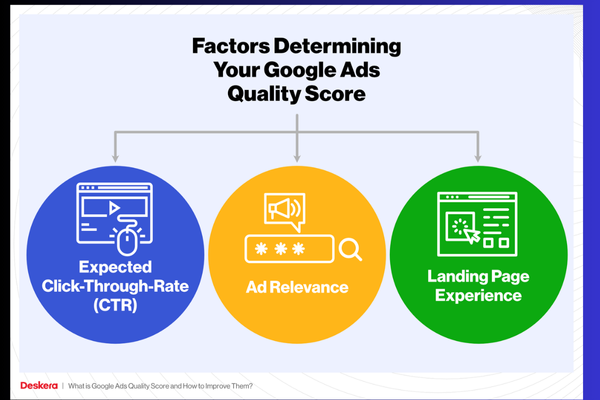
Quality Score impacts both ad visibility and cost. As you scale, ensure Quality Score remains high by:
– Keeping keywords tightly grouped
– Using relevant, high-quality ad copy
– Linking to optimized, user-focused landing pages
– Monitoring expected CTR and ad relevance
Always track keyword-level Quality Score and optimize low performers before adding more volume.
4. Expand with Precision Using STAGs Instead of SKAGs
Instead of opening up a campaign with hundreds of broad keywords, scale with STAGs (Single Theme Ad Groups). These contain tightly related keywords and help maintain high relevance between ad copy and queries, preserving your CTR and conversion quality.
5. Use Smart Bidding Strategies
As you scale, manual bidding becomes harder to manage. Use smart bidding like Target CPA or Maximize Conversions. These use machine learning to adjust bids in real-time, based on user intent and likelihood to convert.
Ensure you have enough conversion data (at least 30–50 per month) before switching to smart bidding for best results.
6. Layer Audiences to Maintain Intent
When expanding keyword or geographic targeting, layer intent-based audiences like:
– In-market audiences
– Custom segments
– Remarketing lists
– Similar audiences
This ensures you reach people who are not only searching broadly but also demonstrate relevant interests or behaviors. It filters out low-quality impressions.
7. Protect with Negative Keywords and Placement Exclusions
As you add more keywords and placements, your ads might start appearing in irrelevant contexts. Regularly check your Search Terms Report and Placement Report.
Use:
– Negative keywords to exclude poor-quality traffic
– Placement exclusions in Display or YouTube to avoid low-performing sites
– Brand safety filters to prevent showing up next to inappropriate content
8. Test and Expand Slowly to New Networks or Campaign Types
Don’t jump into every campaign type at once. Expand gradually:
– Start with Search → then Display/YouTube → then Performance Max or App Campaigns
– Monitor quality KPIs across each new channel
– Run pilot campaigns with smaller budgets before full-scale rollouts
9. Use A/B Testing to Keep Performance High
Continue testing ad variations, headlines, CTAs, and landing pages as you scale. Use Experiments or Ad Variations in Google Ads to identify high-performing combinations and pause underperformers. Constant A/B testing helps maintain high relevance and engagement.
10. Build Campaign Structures That Support Scaling
Campaigns should be organized for easy optimization and expansion. Structure by:
– Product category
– Funnel stage (awareness, consideration, conversion)
– Audience type
– Region or language
Clear structure prevents messiness and ensures you can identify which parts of your account scale well.
11. Monitor Lead Quality Closely (Not Just Volume)
If you’re a lead-gen business, monitor the quality of incoming leads—not just how many you get. Ask:
– Are they sales-ready?
– Is the close rate consistent?
– Are they from your target demographic?
Use CRM data to match Google Ads campaigns to high-converting segments. Adjust bidding and targeting accordingly.
12. Scale Landing Page Variations Alongside Ads
As you scale your ads, test new landing pages that match new ad themes. Use dynamic content or personalized experiences based on keyword, audience, or location to maintain high conversion rates.
13. Monitor Frequency and Ad Fatigue
If you scale Display or Video campaigns, your ads may reach the same people too often. Use frequency capping to limit how often one user sees an ad. Refresh creatives regularly to avoid ad fatigue and maintain performance.
14. Maintain Brand Consistency and Message Quality
While scaling, ensure all ads align with your brand voice, tone, and values. This consistency builds trust, especially when reaching new or cold audiences.
15. Track Micro and Macro Conversions
Monitor both macro goals (sales, sign-ups) and micro goals (add-to-cart, time on site, scroll depth). This helps you understand intent earlier in the funnel and prevents you from focusing only on end conversions, which may take longer during scaling.
16. Keep a Close Eye on KPIs
Watch these metrics closely as you scale:
– Cost per conversion
– Conversion rate
– CTR and Quality Score
– Bounce rate and session duration
– Return on ad spend (ROAS)
– Impression share
Set benchmarks and triggers that alert you when metrics dip, so you can pause or adjust campaigns immediately.
Example: How Zara Scaled Without Losing Quality
Zara ran a Search campaign for “summer dresses.” As performance stabilized, they expanded to “cotton dresses,” “evening dresses,” and regional targeting in South India. Instead of increasing budget all at once, they:
– Used shared budgets with Target ROAS bidding
– Created separate landing pages for each dress category
– Monitored bounce rate and session duration
– Paused non-performing cities
– Added in-market audiences for “fashion shoppers” and “event planning” to boost intent
As a result, Zara doubled their reach in 30 days while maintaining CPA within 5% of the original campaign.
Conclusion
Scaling your Google Ads campaigns is exciting, but maintaining quality is critical for sustainable growth. A successful scaling strategy involves strategic planning, gradual budget increases, data-driven targeting, continuous testing, and strict performance monitoring. With the right structure, bidding automation, audience filters, and landing page alignment, you can grow your campaign size while preserving—or even improving—the quality of traffic and conversions. Scale smart, not just big.