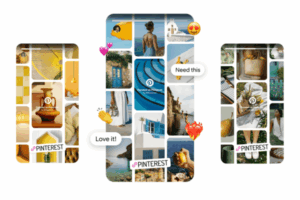
Pinterest is a unique platform where discovery meets personalization. Unlike traditional social media, which focuses on social interaction, Pinterest is a visual discovery engine—a place where users can find inspiration, plan projects, and save ideas. What makes Pinterest particularly effective is its ability to present each user with highly personalized recommendations. These are not random or generic but thoughtfully curated based on what each person likes, searches, and interacts with.
This article explores how Pinterest generates recommendations in depth, detailing the key components of its algorithmic systems, how personalization works, and concluding with a real-world example to illustrate the entire process.
Why Pinterest Needs a Powerful Recommendation System
Pinterest is home to billions of Pins and millions of users. Without a recommendation engine, the sheer volume of content would make finding useful ideas nearly impossible. Pinterest’s goal is to help people discover content they didn’t even know they were looking for. To do that, it must:
- Understand user preferences (both long-term and recent).
- Analyze content meaning (visually and textually).
- Surface the most relevant, timely, and engaging Pins.
The Building Blocks of Pinterest Recommendations
Pinterest’s recommendation system is made up of several key technologies and methodologies. These work together to surface the right content to the right user at the right time.
1. Graph-Based Recommendations: The Pixie Algorithm
One of Pinterest’s core systems is called Pixie—a real-time graph-based recommendation algorithm.
- Imagine every Pin and Board as a node in a massive web.
- When users save Pins to Boards, those items are connected.
- Pixie uses a technique called a random walk on this graph: it starts at Pins you’ve interacted with and explores neighboring nodes (other Pins and Boards) to find ones that are closely connected.
This process helps generate a list of candidate Pins—those that are potentially relevant to you based on what others have saved in similar contexts.
2. Content-Based Filtering: Visual and Textual Analysis
Once candidate Pins are selected, Pinterest applies content-based filtering to refine the list. This involves analyzing the features of the Pin itself, such as:
- Visual characteristics: color, object types, image style.
- Textual metadata: title, description, tags.
- Category: Is it about fashion, home décor, recipes, etc.?
Pinterest uses computer vision and natural language processing (NLP) to understand the meaning and aesthetic of Pins. If you like images with neutral colors and modern furniture, Pinterest will look for Pins that match those features—even if they’re in different categories.
3. Collaborative Filtering: Learning from Similar Users
Another important method is collaborative filtering, which analyzes user behavior patterns.
- If two users frequently save similar Pins, Pinterest assumes they have shared interests.
- It will recommend Pins that one user saved to the other, even if they haven’t seen them before.
This creates a network of shared discovery, using group behavior to inform individual recommendations.
4. Personalized Embeddings with Machine Learning
Pinterest uses deep learning to create embeddings—mathematical representations of Pins and users in high-dimensional space.
- Each Pin has an embedding based on visual and textual content.
- Each user has one or more embeddings based on their history and interests.
The closer two embeddings are, the more similar they are. When Pinterest wants to recommend content, it simply looks for Pins whose embeddings are closest to your user profile.
5. Real-Time User Modeling
People’s interests change over time. Pinterest recognizes this by constantly updating your user profile based on your latest activity:
- Recent searches
- Pins you saved or clicked
- Boards you created
- Time spent on a Pin
- Pins you skipped or hid
These signals allow Pinterest to identify both your long-term interests and short-term intent (like planning a birthday party next week). This helps them deliver recommendations that feel both familiar and fresh.
6. Contextual and Seasonal Adjustments
Pinterest also accounts for contextual factors, such as:
- Time of day: Morning vs. evening interests may differ.
- Season: Summer fashion vs. winter recipes.
- Location: A user in Canada might get snowboarding gear; a user in India might get monsoon decor tips.
- Device type: Mobile browsing may favor quick recipes; desktop might surface design projects.
These insights fine-tune the recommendations so they match not just your interests, but also your current context.
7. Feedback Loops and Manual Controls
Pinterest doesn’t just guess what you like—it listens. Users can influence their feed directly by:
- Hiding Pins they don’t like
- Reporting irrelevant or offensive content
- Following specific Boards or topics
- Clearing their search or browsing history
Every action—positive or negative—is a feedback signal that Pinterest uses to adjust future recommendations.
8. Ranking and Final Selection
After generating and filtering candidates, Pinterest applies a ranking algorithm to decide what to show at the top.
Factors include:
- Predicted engagement score (likelihood you’ll save or click)
- Content freshness
- Diversity of content types and themes
- Prior interactions with similar content
- Advertiser bids (for promoted Pins)
The result is a dynamic, personalized feed optimized to inspire, engage, and encourage exploration.
Real-Life Example: How Recommendations Are Generated for a User
Let’s look at a user named Amira, a 32-year-old event planner interested in home decor, vegan recipes, and sustainable living.
Week 1:
Amira creates a board called “Eco-Friendly Kitchen” and saves several Pins related to glass jars, composting, and zero-waste shopping. She also clicks on a few minimalist kitchen photos.
What Happens:
- Pixie starts from the saved Pins and explores Boards where others saved similar items.
- It finds more Pins about zero-waste lifestyles and minimalist home designs.
- Pin embeddings identify common visual themes like white tones, bamboo accessories, and natural light.
- Collaborative filtering notices that people who saved similar items also saved Pins on indoor herb gardens and vegan meal planning.
Week 2:
Amira searches for “vegan lunch recipes” and saves Pins about grain bowls and mason jar salads. She spends time on a Pin for meal-prep ideas and hides a Pin about meat-based dishes.
What Happens:
- Her recent activity shifts her short-term interest profile toward food.
- Real-time modeling kicks in to prioritize recipe-related Pins.
- The system also notes her hide behavior and reduces the visibility of meat-based content.
- Ranking algorithms boost Pins that fit her current interest in fast, sustainable meals.
Week 3:
Amira doesn’t search anything but scrolls through her home feed. Pinterest shows her a mix of:
- Indoor plant decor
- Sustainable cleaning products
- Easy vegan recipes
- Minimalist bedroom ideas
These are drawn from a blend of long-term (sustainability and decor) and recent (vegan cooking) interests. The balance between familiar and novel keeps her engaged and exploring new ideas.
Benefits of Pinterest’s Recommendation System
Pinterest’s recommendation engine provides several clear advantages:
✅ Highly Personalized Experience
Users feel that the platform “knows” them and adapts to their evolving tastes.
✅ Efficient Discovery
Pinterest reduces the time it takes to find relevant content by showing what’s likely to resonate from the start.
✅ Inspiration-Driven, Not Popularity-Driven
Unlike TikTok or Instagram, Pinterest doesn’t prioritize the most viral content. Instead, it focuses on what’s useful to you.
✅ Intent-Based Recommendations
Because many users come with a purpose (e.g., planning a wedding, finding workout ideas), recommendations are better aligned with goals.
Conclusion
Pinterest’s recommendation engine is a masterclass in personalization and contextual understanding. By combining graph algorithms like Pixie, machine learning models like PinSage, and real-time behavioral signals, Pinterest creates a feed that feels like it was curated just for you.
It’s not just about finding content you already like—it’s about discovering things you didn’t even know you needed.
This dynamic recommendation process is what transforms Pinterest from a digital scrapbook into a powerful engine of inspiration. Whether you’re planning an event, redesigning your home, or exploring new hobbies, Pinterest ensures you’re always just one Pin away from your next great idea.