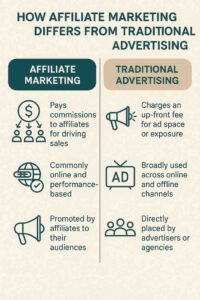
Affiliate marketing is a performance-based marketing strategy where individuals earn commissions by promoting products or services through unique referral links or codes. It’s an accessible entry point for beginners seeking to generate income online, requiring minimal upfront investment compared to other business models. In 2025, affiliate marketing is a thriving industry, generating over $8 billion annually in the U.S. alone (Statista, 2024), driven by the growth of e-commerce, social media, and digital content creation. For beginners, success hinges on understanding affiliate marketing step by step, selecting the right niche, building an audience, and leveraging effective tools and strategies.
Affiliate Marketing Step by Step Guide for Beginners
Step 1: Understand Affiliate Marketing Basics
Before diving in, beginners must grasp affiliate marketing step by step to set realistic expectations:
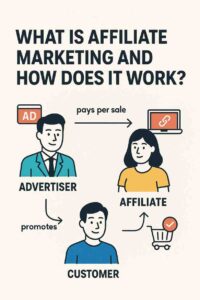
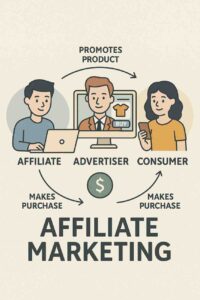
Mechanism: Affiliates promote products or services via unique tracking links provided by merchants or affiliate networks. When a user clicks the link and makes a purchase, the affiliate earns a commission (e.g., 5–50% of the sale). Common models include pay-per-sale, pay-per-click, or pay-per-lead.
Key Players: Merchants (product owners), affiliates (promoters), affiliate networks (e.g., Amazon Associates, ClickBank), and consumers.
Requirements: A platform (e.g., blog, YouTube, social media), internet access, and basic digital marketing skills.
Action: Research affiliate marketing step by step through free resources like blogs (e.g., Neil Patel), YouTube tutorials, or X posts from industry experts. Understand terms like cookies (tracking periods, typically 30–90 days), commissions, and conversion rates.
Challenges: Beginners may overestimate earnings or underestimate effort. Initial income is often low, averaging $100–$500 monthly after 6–12 months (Affiliate Summit, 2024).
Example: Reading “Affiliate Marketing for Beginners” on HubSpot clarifies concepts like tracking and payouts.
Step 2: Choose a Profitable Niche
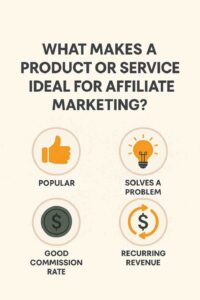
Selecting a niche—a specific market segment—is critical for targeting the right audience and standing out in affiliate marketing step by step:
Mechanism: Choose a niche based on personal interest, market demand, and profitability. Popular niches include health (e.g., fitness gear), wealth (e.g., investing apps), and lifestyle (e.g., travel accessories). Use tools like Google Trends, Amazon Best Sellers, or X searches to identify trending topics.
Criteria: High demand (e.g., fitness trackers), low-to-moderate competition (avoid oversaturated niches like weight loss), and affiliate programs with 10–50% commissions. In India, niches like EdTech or fintech (e.g., UPI apps) are lucrative due to digital adoption (Deloitte, 2025).
Action: Brainstorm 3–5 interests (e.g., yoga, personal finance, gaming). Validate demand using Google Keyword Planner for search volume (e.g., “yoga mats” with 10K+ monthly searches). Check affiliate programs on networks like ShareASale or Impact.
Challenges: Narrow niches limit audience size, while broad niches face competition. Balancing passion and profitability is key.
Example: A beginner passionate about fitness chooses “home workout equipment” after finding high search volume and programs like Fitbit’s 10% commission.
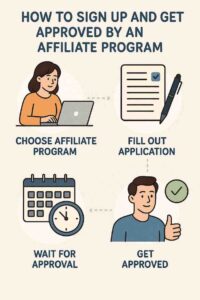
Step 3: Research and Join Affiliate Programs
Affiliate programs provide the products and links to promote, so selecting reputable ones is essential in affiliate marketing step by step:
Mechanism: Join programs through direct merchant websites (e.g., Amazon Associates) or affiliate networks (e.g., ClickBank, CJ Affiliate). Look for high commissions, long cookie durations, and trusted brands. Recurring commission programs (e.g., SaaS like NordVPN) offer sustained earnings.
Action: Search for programs in your niche using terms like “home workout affiliate programs.” Evaluate programs based on commission rates (e.g., 20%+), product quality, and support (e.g., banners, tracking tools). Apply to 5–10 programs, providing your platform details (even if basic).
Popular Programs: Amazon Associates (1–10% commissions), Bluehost ($65–$200 per signup), NordVPN (40–60% per sale). In India, Flipkart and Groww offer ₹100–₹500 per action (X posts, 2025).
Challenges: Some programs require established platforms for approval. Beginners may start with beginner-friendly networks like Amazon or ClickBank.
Example: The beginner joins Amazon Associates for fitness gear and NordicTrack’s program for home gym equipment, offering 8% commissions.
Step 4: Build a Platform to Promote Products
A platform—such as a blog, YouTube channel, or social media account—is the foundation for sharing affiliate links in affiliate marketing step by step:
Mechanism: Choose a platform based on your skills and audience preferences. Blogs are ideal for SEO-driven content, YouTube for tutorials, and Instagram/TikTok for visual niches. In India, YouTube and Instagram dominate, with 500 million and 350 million users, respectively (Statista, 2025).
Action:
- Blog: Purchase a domain ($10–$15/year via GoDaddy) and hosting ($5–$10/month via Bluehost). Install WordPress and a free theme. Write 5–10 articles (e.g., “Best Home Workout Gear for Beginners”) with affiliate links.
- YouTube: Create a channel, invest in a $50 microphone, and produce 5 videos (e.g., “Top 5 Yoga Mats for 2025”). Include links in descriptions.
- Social Media: Set up an Instagram account, post daily fitness tips, and use link-in-bio tools like Linktree for affiliate links.
- Tools: Use Canva for visuals, Grammarly for writing, and TubeBuddy for YouTube SEO.
Challenges: Building a platform takes time (3–6 months for traction). Content creation requires consistency and quality.
Example: The beginner starts a blog, “FitHomeVibes,” with articles reviewing yoga mats and workout gear, embedding Amazon and NordicTrack links.
Step 5: Create High-Quality, Value-Driven Content
Content is the vehicle for promoting affiliate products, driving traffic, and building trust in affiliate marketing step by step:
Mechanism: Produce content that educaes, entertains, or solves problems, subtly integrating affiliate links. Formats include reviews (e.g., “NordicTrack Treadmill Review”), tutorials (“How to Start Yoga at Home”), or listicles (“Top 10 Fitness Gadgets”). Disclose affiliate links to comply with FTC guidelines and India’s DPDPA (fines up to ₹250 crore for non-compliance, 2025).
Action: Publish 2–3 pieces weekly, optimizing for SEO with tools like Yoast (blogs) or hashtags (social media). Use storytelling to engage (e.g., “How a Yoga Mat Changed My Routine”). Place links naturally in content, CTAs, and resource pages.
Best Practices: Focus on audience pain points (e.g., affordable gear), use visuals, and provide honest reviews to build credibility.
Challenges: Low-quality content fails to rank or convert. SEO and audience engagement take months to master.
Example: The beginner writes “5 Best Yoga Mats Under $50,” reviewing Amazon products, and posts a YouTube tutorial linking to NordicTrack.
Step 6: Drive Targeted Traffic
Traffic is essential for clicks and conversions, requiring strategic promotion in affiliate marketing step by step:
Mechanism: Use organic and paid channels to attract your niche audience:
- SEO: Optimize blog posts for keywords (e.g., “best yoga mats 2025”) using Google Keyword Planner. Aim for 1,000–2,000 monthly visits in 6 months.
- Social Media: Share content on Instagram, TikTok, or X, using niche hashtags (e.g., #HomeWorkout). Engage with followers via comments and stories.
- Email Marketing: Build a list using free tools like Mailchimp, offering lead magnets (e.g., “Free Yoga Guide”). Send weekly newsletters with affiliate links.
- Paid Ads (Optional): Start with $5–$10/day on Google Ads or Instagram for targeted niches, scaling after ROI.
Action: Spend 1–2 hours daily promoting content. Join niche communities (e.g., Reddit’s r/Fitness) to share value-driven posts, avoiding spam.
Challenges: Organic traffic grows slowly, and paid ads require budget and expertise. Algorithm changes on platforms like Instagram disrupt reach.
Example: The beginner optimizes blog posts for SEO, shares Instagram Reels with #YogaLife, and joins fitness X groups to promote content.
Step 7: Track Performance and Optimize
Monitoring performance ensures long-term success by identifying what works in affiliate marketing step by step:
Mechanism: Use affiliate dashboards (e.g., Amazon Associates) and analytics tools (e.g., Google Analytics, YouTube Studio) to track clicks, conversions, and earnings. Test variables like link placement, content types, or traffic sources to improve ROI.
Action: Review metrics weekly, focusing on conversion rates (1–5% is average, Impact, 2024) and top-performing products. Double down on high earners (e.g., NordicTrack over low-margin mats). Experiment with A/B testing for CTAs (e.g., “Buy Now” vs. “Check Price”).
Tools: Bitly for link tracking, Hotjar for user behavior, and Google Search Console for SEO insights.
Challenges: Low initial traffic limits data. Optimization requires patience and experimentation.
Example: The beginner notices NordicTrack links convert at 3% vs. 1% for Amazon mats, shifting focus to treadmill reviews.
Step 8: Scale and Diversify
Once initial success is achieved, scale efforts to increase earnings in affiliate marketing step by step:
Mechanism: Expand content (e.g., 50 blog posts, 20 videos), diversify platforms (add TikTok or Pinterest), and join more programs (e.g., Fitbit, Peloton). Explore higher-ticket products or recurring commissions (e.g., fitness apps). Outsource content creation if budget allows.
Action: Set a goal (e.g., $1,000/month in 12 months). Invest earnings in tools (e.g., SEMrush, $120/year) or ads. Build authority by guest posting on fitness blogs or collaborating with influencers.
Challenges: Scaling too fast risks quality decline. Diversifying requires learning new platforms.
Example: The beginner adds Peloton’s affiliate program, creates TikTok workout videos, and earns $500/month after 9 months.
Challenges for Beginners
- Time Investment: Building an audience takes 6–12 months, with 20–30 hours weekly.
- Competition: Niche saturation requires unique content and SEO mastery.
- Regulatory Compliance: FTC and DPDPA mandate transparent disclosures.
- Platform Dependence: Algorithm or policy changes (e.g., Amazon’s 2020 commission cuts) impact earnings.
- Learning Curve: SEO, content creation, and analytics demand ongoing education.
Case Study: Blogging with Amazon Associates
A beginner named Priya, based in India, started affiliate marketing step by step in 2024, leveraging Amazon Associates, with success relevant to 2025.
Background
Priya, a fitness enthusiast, launched a blog, “FitIndiaVibes,” targeting home workouts, inspired by India’s wellness surge (60% prioritize health, Deloitte, 2025).
Steps Taken
- Learning: Priya studied affiliate marketing step by step via YouTube (e.g., Ankur Aggarwal’s channel) and X posts from Indian affiliates.
- Niche Selection: She chose “home workout equipment” after validating demand (10K+ searches for “yoga mats” via Google Trends) and finding Amazon India’s 5–10% commissions.
- Affiliate Programs: Priya joined Amazon Associates and Decathlon’s program (8% commissions), approved due to her blog’s initial content.
- Platform: She bought a domain ($12/year, Namecheap) and hosting ($7/month, Hostinger), creating a WordPress blog with 10 posts (e.g., “Best Treadmills Under ₹20,000”).
- Content: Priya wrote SEO-optimized reviews and posted Instagram Reels with #FitnessIndia, disclosing affiliate links per DPDPA.
- Traffic: She optimized posts for keywords, shared content on X fitness groups, and built a 500-subscriber email list with a free “Workout Planner.”
- Tracking: Using Amazon’s dashboard and Google Analytics, Priya tracked 2% conversion rates, focusing on high-margin Decathlon products.
- Scaling: After 6 months, she added YouTube tutorials, joined Flipkart’s program, and earned ₹15,000/month by month 9.
Impact and Lessons
- Earnings: Priya earned ₹1,80,000 annually, reinvesting in ads and tools.
- Audience: Her blog reached 5,000 monthly visitors, with 10K Instagram followers.
- Lessons: Niche focus, SEO, and consistent content drove success. Compliance with DPDPA built trust.
- Relevance: Priya’s approach aligns with India’s affiliate growth, projected at 25% CAGR by 2027 (X posts, 2025).
Conclusion
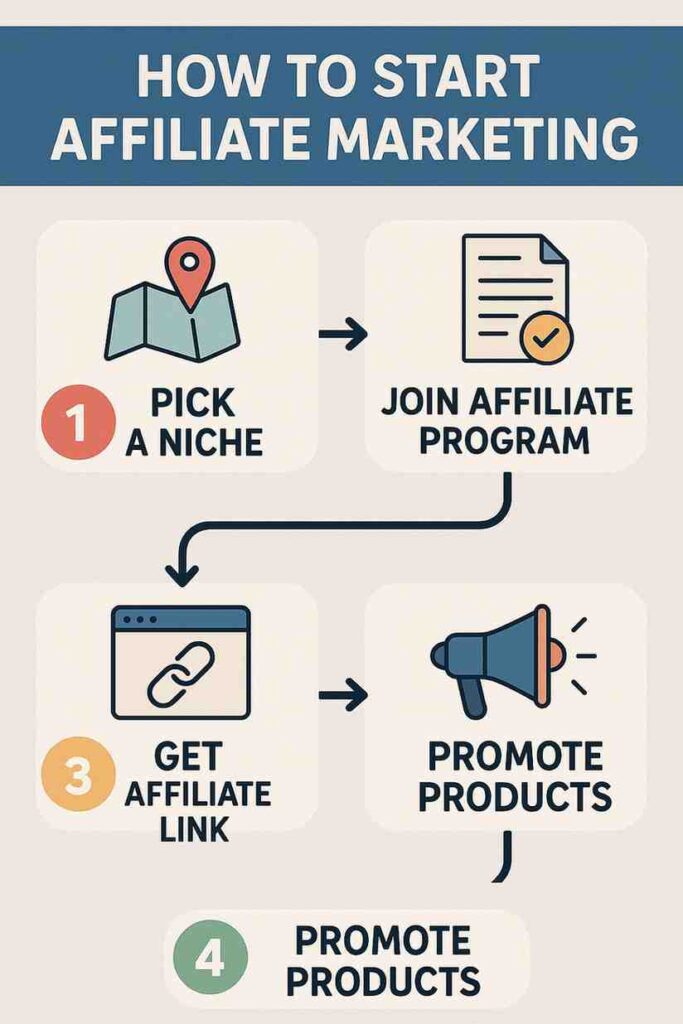
Affiliate marketing step by step for beginners involves understanding basics, choosing a profitable niche, joining programs, building a platform, creating value-driven content, driving traffic, tracking performance, and scaling efforts. This process, while time-intensive, leverages low-cost tools and digital platforms to generate income. Priya’s success with “FitIndiaVibes” demonstrates the power of niche focus, SEO, and compliance in India’s growing market. In 2025, beginners must navigate competition, regulations, and platform changes to succeed, but with persistence and strategic execution, offers a viable path to financial independence in the digital economy.