Newsletters are a cornerstone of email marketing, offering businesses, creators, students, and organizations a direct and consistent way to engage with their audience, build relationships, and achieve specific goals. Unlike promotional emails or transactional messages, newsletters focus on delivering value through curated, informative, or entertaining content, fostering trust and encouraging long-term subscriber engagement. However, creating a newsletter that stands out in crowded inboxes requires careful selection of content types that resonate with the audience and align with campaign objectives. For students, bloggers, or small creators with limited resources, choosing the right content is critical to maximizing impact without overwhelming time or budget constraints. This essay explores the best types of content for newsletters, their benefits, strategies for implementation, challenges, and provides a practical example tailored to a student context.
Why Newsletter Content Matters
Newsletters serve as a regular touchpoint with subscribers, reinforcing your brand, sharing updates, and driving actions such as website visits, purchases, or event registrations. The content within a newsletter determines its success, influencing key metrics like open rates (target: 20–30%), click-through rates (target: 5–10%), and unsubscribe rates (target: <0.5%). Effective content:
- Delivers Value: Addresses audience needs, solves problems, or entertains, encouraging subscribers to stay engaged.
- Builds Trust: Consistent, high-quality content establishes credibility, making subscribers more likely to act on future calls-to-action (CTAs).
- Drives Engagement: Compelling content prompts clicks, replies, or shares, boosting interaction and campaign performance.
- Supports Goals: Aligns with objectives, whether it’s driving blog traffic, promoting a service, or nurturing leads.
For students or beginners, selecting content types that are easy to produce yet impactful is key to creating sustainable newsletters.
The Best Types of Content for Newsletters
The best newsletter content types depend on your audience, goals, and resources, but the following are universally effective, adaptable for various contexts, and feasible for students using free tools like Mailchimp or MailerLite.
1. Educational Content
- Description: Tips, tutorials, how-to guides, or industry insights that teach subscribers something new or solve a problem.
- Why It Works: Educational content delivers immediate value, positioning you as an authority and building trust. For students, sharing knowledge from coursework or personal projects (e.g., coding tips, study hacks) resonates with peers.
- Examples:
- A student blogger might share “5 Time Management Tips for Finals Week.”
- A tech creator could offer a mini-tutorial on “How to Build a Portfolio Website in 10 Steps.”
- Implementation: Use bullet points or numbered lists for scannability, include a CTA (e.g., “Read the Full Guide”), and link to a blog post or video for deeper engagement.
- Benefits: High engagement, shareable, evergreen (reusable over time).
2. Curated Resources
- Description: A roundup of useful tools, articles, videos, or links relevant to your audience’s interests.
- Why It Works: Curated content saves subscribers time by filtering the best resources, appealing to busy audiences like students or professionals. It’s easy to produce, requiring minimal original content.
- Examples:
- A career-focused newsletter might list “Top 10 Job Boards for Internships.”
- A design student could share “5 Free Graphic Design Tools You Need.”
- Implementation: Introduce the list with a brief context (e.g., “I found these tools game-changing for my projects”), use a clean layout with links, and invite feedback (e.g., “What tools do you use?”).
- Benefits: Quick to create, high value, encourages clicks.
3. Personal Stories or Anecdotes
- Description: Relatable stories or experiences that humanize the sender and connect with the audience emotionally.
- Why It Works: Stories make newsletters memorable and foster rapport, especially for students sharing authentic experiences (e.g., overcoming academic challenges). They differentiate your brand in a crowded inbox.
- Examples:
- A student might recount “How I Landed My First Internship After 10 Rejections.”
- A coding blogger could share “The Time My Code Crashed During a Demo.”
- Implementation: Start with a hook (e.g., “I thought I’d never recover…”), tie the story to a lesson or CTA (e.g., “Here’s what I learned”), and keep it concise (150–200 words).
- Benefits: Builds connection, boosts engagement, unique to you.
4. Updates or Announcements
- Description: News about your brand, projects, or community, such as new blog posts, product launches, or events.
- Why It Works: Updates keep subscribers informed and reinforce your brand’s presence. For students, this could mean sharing a new portfolio project or campus event.
- Examples:
- A student club might announce “Join Our Virtual Career Fair Next Week!”
- A blogger could highlight “My Latest Post: How to Ace Group Projects.”
- Implementation: Lead with the most exciting news, use a clear CTA (e.g., “Register Now”), and balance with value-driven content to avoid seeming self-promotional.
- Benefits: Drives action, maintains relevance, supports goals.
5. Exclusive Offers or Incentives
- Description: Special discounts, early access, or free resources available only to subscribers.
- Why It Works: Exclusivity creates a sense of privilege, encouraging opens and conversions. Students can offer digital products (e.g., templates, e-books) or affiliate promotions.
- Examples:
- A student freelancer might offer “10% Off Resume Reviews for Subscribers.”
- A YouTuber could provide “Early Access to My New Coding Course.”
- Implementation: Highlight the offer’s value (e.g., “Save 2 hours with this template”), use urgency if applicable (e.g., “Offer ends Friday”), and include a prominent CTA.
- Benefits: Boosts conversions, rewards loyalty, incentivizes retention.
6. Community Highlights
- Description: Content that showcases subscriber contributions, user-generated content, or community achievements.
- Why It Works: Featuring subscribers fosters a sense of belonging, encouraging engagement and loyalty. Students can highlight peers’ successes or crowdsource content.
- Examples:
- A campus newsletter might feature “Student Spotlight: Sarah’s Startup Journey.”
- A coding community could share “Your Best Python Projects This Month.”
- Implementation: Request submissions via email or social media, include quotes or photos (with permission), and encourage others to participate (e.g., “Want to be featured?”).
- Benefits: Builds community, increases interaction, low creation effort.
7. Polls, Surveys, or Interactive Content
- Description: Questions, quizzes, or polls that invite subscriber input, often with results shared later.
- Why It Works: Interactive content boosts engagement by involving subscribers directly, providing valuable feedback for content planning. Students can use polls to understand audience needs.
- Examples:
- A study blog might ask, “What’s Your Biggest Exam Stressor?”
- A tech newsletter could poll, “Which Coding Language Are You Learning?”
- Implementation: Use email platform features (e.g., Mailchimp polls) or link to external tools like Google Forms, keep questions simple, and promise results (e.g., “See results next week!”).
- Benefits: High engagement, gathers insights, encourages replies.
8. Trend or News Commentary
- Description: Insights or opinions on current events, industry trends, or timely topics relevant to your audience.
- Why It Works: Commentary positions you as a thought leader and keeps content fresh. Students can share perspectives on academic or industry trends (e.g., AI in education).
- Examples:
- A business student might discuss “How Remote Work Is Changing Internships.”
- A tech blogger could analyze “Why Python Is Still King in 2025.”
- Implementation: Summarize the trend, offer a unique take, and link to a blog post or article for details, with a CTA like “Read My Thoughts.”
- Benefits: Timely, establishes expertise, drives traffic.
Strategies for Implementing Newsletter Content
To maximize the impact of these content types, follow these strategies:
- Know Your Audience: Use signup forms or surveys to understand subscriber needs (e.g., “What’s your biggest challenge?”) and tailor content accordingly.
- Balance Content Types: Mix educational, personal, and promotional content (e.g., 80% value, 20% promotion) to maintain engagement without seeming salesy.
- Keep It Scannable: Use short paragraphs, bullet points, and bold headers for readability, as 46% of emails are opened on mobile (Litmus, 2024).
- Include a Clear CTA: Focus on one action per email (e.g., “Read Now,” “Download Free Guide”) to drive results.
- Personalize When Possible: Use subscriber names or segment-specific content (e.g., “Python tips for [Name]”) to boost opens by 26% (Campaign Monitor).
- Leverage Free Tools: Platforms like Mailchimp or MailerLite offer templates and analytics for students on a budget.
- Batch Content Creation: Write multiple newsletters in one session to save time, scheduling them via your platform.
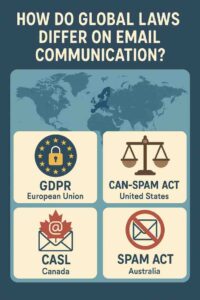
- Ensure Compliance: Use double opt-in, include unsubscribe links, and add a physical address (e.g., university address) to comply with GDPR, CAN-SPAM, and CASL.
Challenges for Students
- Time Constraints: Balancing academics and content creation is tough. Use automation and batching to streamline.
- Content Fatigue: Generating fresh ideas can be hard. Repurpose blog posts or crowdsource via polls.
- Limited Resources: Premium tools may be inaccessible. Free platforms suffice for basic newsletters.
- Engagement Monitoring: Interpreting metrics requires learning. Focus on open rates, CTRs, and unsubscribes initially.
- Audience Retention: High unsubscribe rates may occur if content lacks value. Prioritize audience feedback and testing.
Example of a Newsletter with Effective Content
Scenario:
Noah, a junior computer science student, runs a blog, “CodeBit,” sharing beginner-friendly coding tutorials. He uses MailerLite’s free plan to send weekly newsletters to his audience of students and aspiring developers, aiming to drive blog traffic and promote affiliate coding courses. Noah crafts a newsletter combining multiple content types to engage subscribers.
Implementation:
- Audience and Goals:
- Audience: College students, career switchers, coding beginners.
- Goals: Increase blog traffic by 20%, promote affiliate courses, maintain engagement.
- Newsletter Setup:
- Frequency: Weekly, sent every Tuesday at 10 AM IST (optimized for open rates).
- Content Types: Educational tip, personal story, curated resources, and soft promotional offer.
- Lead Magnet: Signup form offers “10 Python Shortcuts for Beginners,” promoted on his blog, YouTube, and coding club.
- Sample Newsletter (July 1, 2025):
- Subject Line: “[Name], This Python Tip Saved My Project!”
- Body (250 words):
Hey [Name],
Coding can feel like solving a puzzle at 2 AM, right? This week, I’m sharing a Python tip that saved my last project: using list comprehensions to write cleaner code. Here’s a quick example:- Instead of: new_list = []; for x in old_list: new_list.append(x*2)
- Use: new_list = [x*2 for x in old_list]
Want the full scoop? My latest blog post breaks it down with examples. [Read Now]
Story Time: Last semester, I bombed a coding demo because my loops were a mess. That failure taught me to simplify my code, and now I’m obsessed with shortcuts like these. What’s your coding horror story? Hit reply—I’d love to hear!
Resource Roundup: Here are 3 free tools I use daily: - VS Code: Best code editor for beginners.
- Replit: Run code online, no setup needed.
- W3Schools: Quick Python tutorials.
[Check Them Out]
P.S. If you’re serious about Python, I recommend this course—it’s helped me level up fast. Subscribers get 10% off! [Learn More]
Happy coding,
Noah
Update preferences [here] or [unsubscribe].
Footer: CodeBit, 456 Tech Lane, Code City, CC 78901, noah@codebit.com
- Structure:
- Personalization: Uses [Name] in subject and greeting.
- Educational: Python tip with code example.
- Story: Relatable anecdote about a coding failure.
- Curated: List of free tools with links.
- Promotional: Soft pitch for affiliate course with discount.
- Interactive: Invites replies for engagement.
- Compliance: Includes unsubscribe link and address.
- Technical Setup:
- Noah uses MailerLite’s drag-and-drop editor for a mobile-friendly design.
- He configures SPF and DKIM for deliverability and tests across Gmail and Outlook.
- The newsletter is scheduled in advance, with automation for welcome series.
- Monitoring:
- Noah tracks open rates (target: 25%, achieved: 30%), click-through rates (target: 8%, achieved: 10%), and unsubscribes (target: <0.5%, achieved: 0.2%).
- He tests subject lines (e.g., “Python Tip” vs. “[Name], Python Hack”), boosting opens by 12%.
- Affiliate link clicks generate $50 in commissions, supporting his goals.
Outcome:
- Noah grows his list to 400 subscribers, with 80% opening the newsletter.
- The newsletter drives 30% more blog traffic, with 15% clicking resource links.
- 10 subscribers sign up for the affiliate course, earning $50.
- High engagement and low unsubscribes set the stage for future course promotions.
Conclusion
The best types of content for newsletters—educational tips, curated resources, personal stories, updates, exclusive offers, community highlights, interactive elements, and trend commentary—deliver value, foster engagement, and support campaign goals. By mixing these types, balancing value with promotion, and tailoring content to audience needs, newsletters can stand out and build lasting connections. For students like Noah, these content types are accessible, leveraging free tools and personal experiences to create impactful campaigns. Despite challenges like time constraints or content ideation, strategic planning and analytics overcome barriers. Noah’s example illustrates how a student can craft a newsletter that drives traffic and monetization, underscoring the power of thoughtful content selection in email marketing success.