Email marketing is a powerful tool for businesses, creators, and individuals to engage with their audience, build relationships, and drive conversions. However, one of the most critical decisions in email marketing is determining how often to send emails. The frequency of emails can significantly impact subscriber engagement, retention, and campaign success. Sending too many emails risks overwhelming or annoying subscribers, leading to unsubscribes or spam complaints, while sending too few can result in missed opportunities and reduced visibility. Striking the right balance requires understanding your audience, goals, and content strategy, as well as leveraging data to optimize frequency. This essay explores the factors influencing email frequency, general guidelines, best practices for determining the optimal cadence, potential challenges, and provides a practical example to illustrate an effective email schedule.
Factors Influencing Email Frequency
The ideal email frequency varies depending on several factors, including audience expectations, business objectives, and the type of emails being sent. Below are the key considerations to guide your decision:
1. Audience Expectations
Subscribers’ preferences are paramount in determining email frequency. When users sign up for your list, they typically expect a certain type and frequency of content based on what was promised during the opt-in process. For example:
- A subscriber who signs up for a “weekly newsletter” expects one email per week, while someone joining a “daily deals” list anticipates more frequent emails.
- Failing to align with expectations can lead to disengagement. If a subscriber expects monthly updates but receives daily emails, they may unsubscribe or mark emails as spam.
To understand audience preferences, include options in signup forms for subscribers to choose their desired frequency (e.g., “weekly” or “monthly”) or content type (e.g., “newsletters” or “promotions”). Surveys or preference centers can also help gauge what subscribers want.
2. Business or Campaign Goals
Your email marketing objectives influence frequency. Different goals require different cadences:
- Brand Awareness: Newsletters or educational content may be sent weekly or biweekly to keep your brand top-of-mind without being overly sales-driven.
- Lead Nurturing: Drip campaigns, such as welcome series or onboarding sequences, may involve multiple emails over a short period (e.g., three emails in one week) to guide prospects through the funnel.
- Sales and Promotions: E-commerce businesses may send more frequent emails during peak shopping seasons (e.g., daily during Black Friday) to capitalize on urgency.
- Re-engagement: Inactive subscribers might receive a single re-engagement email every few months to avoid overwhelming them.
Align frequency with your goals to ensure emails are purposeful and effective.
3. Type of Emails
The type of email—newsletter, transactional, or promotional—affects how often you should send:
- Newsletters: Typically sent weekly or monthly, newsletters provide value through updates, tips, or curated content. Weekly is common for blogs or content creators, while monthly suits less frequent updates.
- Transactional Emails: These are triggered by user actions (e.g., order confirmations, password resets) and don’t follow a fixed schedule. However, they should be sent immediately to ensure relevance.
- Promotional Emails: These can vary from weekly to daily, depending on the campaign. For example, a retailer might send one promotional email per week but increase to daily during a sale.
Balancing these types ensures subscribers receive a mix of value-driven and sales-focused content.
4. Audience Segment
Segmentation allows you to tailor frequency to different subscriber groups. For instance:
- Highly Engaged Subscribers: Frequent buyers or active openers may tolerate or even welcome more frequent emails (e.g., weekly promotions).
- New Subscribers: A welcome series with multiple emails in the first two weeks can build momentum, followed by a reduced frequency.
- Inactive Subscribers: Send less frequent emails (e.g., monthly or quarterly re-engagement campaigns) to avoid overwhelming them.
Segmentation ensures each group receives emails at a cadence that matches their engagement level.
5. Industry and Content Relevance
Email frequency varies by industry. For example:
- E-commerce: Retailers often send 2-4 emails per week, including promotions and product updates, especially during holidays.
- Blogs or Content Creators: Weekly or biweekly newsletters are common to share new posts or insights.
- B2B Companies: Monthly or biweekly emails may suffice for sharing case studies or industry updates, as B2B audiences often prefer less frequent, high-value content.
- Nonprofits: Monthly newsletters with occasional donation appeals balance engagement and fundraising.
The relevance of your content also matters. If emails consistently provide value (e.g., actionable tips or exclusive offers), subscribers are more likely to accept higher frequencies.
6. Subscriber Lifecycle Stage
Frequency should align with where subscribers are in their journey:
- Acquisition: New subscribers may receive a welcome series (3-5 emails over 1-2 weeks) to build trust.
- Nurturing: Active subscribers might receive weekly or biweekly emails to maintain engagement.
- Retention: Loyal customers could receive monthly loyalty rewards or exclusive offers.
- Re-engagement: Inactive subscribers might receive one email every 1-3 months to rekindle interest.
Adjusting frequency based on lifecycle stage ensures emails remain relevant and timely.
General Guidelines for Email Frequency
While there’s no universal rule, industry benchmarks and research provide guidance:
- Weekly: A common starting point for newsletters or mixed-content emails, balancing visibility and engagement without overwhelming subscribers. HubSpot reports that 44% of subscribers prefer weekly emails.
- Biweekly: Suitable for industries with less frequent updates, such as B2B or nonprofits, to maintain engagement without overloading inboxes.
- Monthly: Ideal for brands with limited content or highly targeted audiences, ensuring high-value emails.
- Daily: Appropriate for time-sensitive industries (e.g., news outlets, daily deals) or during specific campaigns (e.g., holiday sales). However, daily emails risk fatigue unless explicitly requested.
- Event-Based: Transactional or triggered emails (e.g., abandoned cart reminders) should be sent as needed, typically within hours of the triggering action.
A 2024 Campaign Monitor study found that 66% of marketers send 1-4 emails per month, with higher frequencies correlating with e-commerce and retail. However, the optimal frequency depends on testing and audience feedback.
Best Practices for Determining Email Frequency
To find the right email frequency, follow these best practices:
- Set Clear Expectations at Signup: During the opt-in process, specify email frequency (e.g., “Join our weekly newsletter for tips and updates”). This aligns subscriber expectations and reduces churn.
- Use a Preference Center: Allow subscribers to choose their email frequency or content type (e.g., “weekly tips” or “monthly promotions”) to personalize their experience.
- Start Conservatively: Begin with a lower frequency (e.g., weekly or biweekly) and monitor engagement metrics. Increase frequency if open rates and click-through rates remain strong.
- Leverage Automation: Use automated workflows for triggered emails (e.g., welcome series, abandoned cart) to deliver timely messages without increasing manual effort.
- Segment Your List: Tailor frequency to segments based on engagement, interests, or lifecycle stage. For example, send weekly emails to active subscribers and monthly to inactives.
- Monitor Key Metrics: Track open rates (target: 20-30%), click-through rates (target: 5-10%), unsubscribe rates (target: <0.5%), and spam complaints (target: <0.1%). High unsubscribes or complaints may indicate excessive frequency.
- Test and Optimize: Conduct A/B tests to compare frequencies (e.g., weekly vs. biweekly) and analyze results. Use analytics from platforms like Mailchimp or ConvertKit to refine your approach.
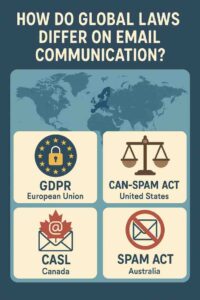
- Respect Regulations: Ensure compliance with GDPR, CAN-SPAM, and CASL by providing unsubscribe options and honoring preferences. Excessive emails without consent can lead to legal penalties.
- Balance Value and Promotion: Mix value-driven content (e.g., tips, insights) with promotional emails to maintain engagement. A common ratio is 80% value, 20% promotion.
Challenges in Determining Email Frequency
- Over-Sending: Too many emails can lead to subscriber fatigue, increasing unsubscribes or spam complaints. For example, daily promotional emails may overwhelm non-retail audiences.
- Under-Sending: Infrequent emails can cause subscribers to forget your brand, reducing engagement. A monthly newsletter may not suffice for a blog with weekly content.
- Audience Diversity: Different segments may have conflicting preferences, requiring careful segmentation and testing.
- Time Constraints: Students or small creators may struggle to produce frequent, high-quality content, necessitating automation or batch creation.
- Seasonal Variations: Frequency needs may spike during holidays or events, requiring adjustments to avoid overwhelming subscribers.
Example of an Email Frequency Strategy
Scenario:
Maya, a final-year marketing student, runs a blog, “Career Kickstart,” where she shares job search tips and internship advice for college students. She wants to grow her email list and engage subscribers with a balanced email frequency to promote her blog and a planned career coaching service. Using MailerLite’s free plan, Maya designs a frequency strategy to maximize engagement without overwhelming her audience.
Implementation:
- Audience and Goals:
- Audience: College students and recent graduates seeking career advice.
- Goals: Drive blog traffic, build trust, and promote her upcoming coaching service.
- Signup Expectations:
- Maya’s signup form states: “Join Career Kickstart for weekly job search tips and exclusive resources!” This sets clear expectations for weekly newsletters.
- She includes a preference center allowing subscribers to choose “weekly tips” or “monthly updates.”
- Email Types and Frequency:
- Welcome Series (New Subscribers):
- Frequency: 3 emails over 10 days.
- Content:
- Email 1 (Immediate): Delivers a lead magnet, “Job Interview Prep Checklist,” and introduces Maya.
- Email 2 (Day 4): Shares a blog post, “5 Common Resume Mistakes to Avoid.”
- Email 3 (Day 10): Invites subscribers to a free webinar on LinkedIn optimization.
- Weekly Newsletter:
- Frequency: Every Monday, targeting a 25% open rate.
- Content: Includes one job search tip, a blog post link, and a career resource (e.g., scholarship list). Promotional content (e.g., coaching service) is limited to once every 4-6 weeks.
- Abandoned Cart (for Webinar Signups):
- Frequency: 1-2 emails, triggered by incomplete webinar registrations.
- Content: Email 1 (1 hour later) reminds users to complete registration; Email 2 (24 hours later) offers a replay link.
- Re-Engagement Campaign:
- Frequency: Quarterly for subscribers inactive for 90 days.
- Content: Offers a new lead magnet, “Career Goal-Setting Worksheet,” with a CTA to re-engage or unsubscribe.
- Welcome Series (New Subscribers):
- Segmentation:
- Maya segments her list into:
- New Subscribers: Receive the welcome series.
- Engaged Subscribers: Weekly newsletters, based on high open rates.
- Infrequent Openers: Biweekly newsletters to reduce frequency.
- Inactive Subscribers: Quarterly re-engagement emails.
- Maya segments her list into:
- Automation:
- Maya uses MailerLite to automate the welcome series, abandoned cart emails, and re-engagement campaigns, saving time while ensuring timely delivery.
- Compliance:
- She uses double opt-in to ensure consent, includes an unsubscribe link, and adds her university address in the footer, complying with CAN-SPAM and GDPR.
- Monitoring and Optimization:
- Maya tracks metrics: open rates (28%), click-through rates (9%), unsubscribe rates (0.3%), and spam complaints (0%).
- She tests weekly vs. biweekly newsletters for infrequent openers, finding biweekly reduces unsubscribes by 10%.
- If unsubscribe rates rise above 0.5%, she plans to reduce promotional content.
- Promotion:
- Maya promotes her signup form on her blog, LinkedIn, and her university’s career services group, emphasizing the checklist lead magnet.
- She shares a QR code at campus career fairs to attract subscribers.
Outcome:
- After four months, Maya grows her list to 400 subscribers, with 80% opting for weekly emails and 20% for monthly.
- The welcome series achieves a 35% open rate and 12% click-through rate, driving 20% more blog traffic.
- Weekly newsletters maintain a 28% open rate, with 5% of subscribers signing up for her webinar.
- The re-engagement campaign reactivates 10% of inactive subscribers, reducing list churn.
- Maya’s balanced frequency builds trust, paving the way for her coaching service launch, with 15 subscribers expressing interest.
Conclusion
Determining how often to send emails requires balancing audience expectations, business goals, and content relevance while leveraging segmentation and analytics to optimize engagement. Weekly or biweekly emails are common starting points, with adjustments based on subscriber behavior and campaign objectives. By setting clear expectations, testing frequencies, and monitoring metrics, you can find the sweet spot that maximizes engagement without causing fatigue. Maya’s example illustrates how a student can implement a balanced email frequency strategy to grow an engaged audience, demonstrating the importance of aligning cadence with subscriber needs. As email marketing evolves, ongoing testing and adaptation will ensure your frequency remains effective and sustainable.