Introduction
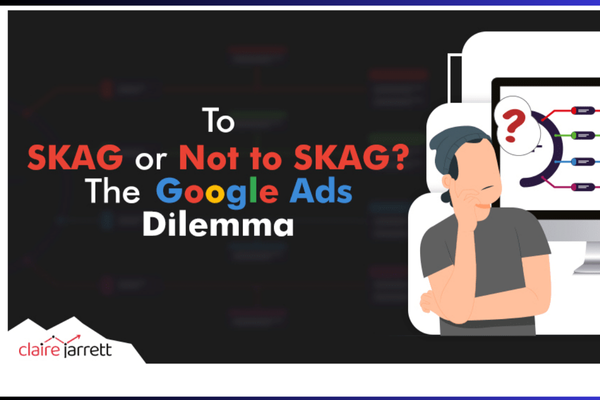
SKAGs, or Single Keyword Ad Groups, are a Google Ads campaign structuring strategy where each ad group contains only one keyword (or a close variant). This method gives advertisers granular control over their ads, match types, and landing page relevance. While once considered a gold standard for account structure, the rise of automation, responsive search ads, and broader keyword matching has shifted the discussion. Still, SKAGs can be powerful when used correctly—especially in high-budget, competitive, or high-conversion-value industries.
What Are SKAGs?
A SKAG setup means you isolate a single keyword (usually in multiple match types like exact, phrase, and modified broad) into its own ad group. For example, if you’re targeting the keyword “men’s running shoes,” you’d create one ad group with only that keyword in its different match forms, and all the ad copy in that group would be specifically aligned to that keyword.
Purpose of SKAGs
The main idea is to increase relevance between the keyword, ad copy, and landing page, which can improve Quality Score, CTR (click-through rate), and conversion rates. It also gives you much more precise data on what’s working.
Key Impacts of Using SKAGs
1. Improved Quality Score
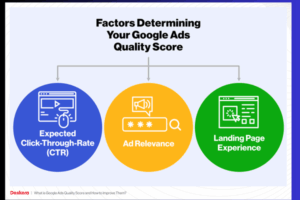
Google’s Quality Score is based on ad relevance, expected CTR, and landing page experience. SKAGs improve ad relevance because your ad is tightly aligned to a specific keyword.
Example:
If your keyword is [buy white sneakers], and your ad headline says “Buy White Sneakers – Free Shipping,” and the landing page is also about white sneakers, all three components are perfectly aligned. This improves Quality Score, which can reduce CPCs (cost per click).
2. Higher CTR (Click-Through Rate)
When users see ads that closely match their search intent, they are more likely to click. Because SKAGs allow you to write ads that are tailored exactly to the keyword, your CTR can increase.
Example:
Compare this:
Generic ad: “Shop Sneakers – Great Deals on All Shoes”
SKAG-tailored ad: “Buy White Sneakers – Limited Time Offer on White Styles”
The second ad is more relevant to the keyword and usually performs better.
3. More Control Over Match Types and Search Terms
SKAGs let you monitor performance at a micro-level. You can quickly see which exact match types or variants are working and which aren’t. This gives you clarity for bid adjustments, negative keywords, and ad messaging.
4. Better Negative Keyword Management
When you use SKAGs, it’s easier to control and exclude cross-traffic. For example, if you have SKAGs for both “men’s running shoes” and “women’s running shoes,” you can add “women” as a negative keyword in the “men’s” ad group and vice versa. This prevents ads from appearing for the wrong audience.
5. Enhanced Landing Page Alignment
SKAGs encourage creating unique landing pages that directly match the search term. This again improves Quality Score and boosts conversions because users land exactly where they expect to go.
6. Easier A/B Testing and Optimization
Since each SKAG is focused on a single intent, it’s easier to test variations of ad copy or landing pages and know precisely which keyword is responsible for results.
7. Precision in Reporting
You can analyze performance by keyword without clutter from other terms in the same ad group. This leads to sharper insights and more strategic decisions.
Limitations and Challenges of SKAGs
1. Complexity in Account Management
Managing hundreds or thousands of ad groups becomes time-consuming. Creating, optimizing, and maintaining each SKAG requires significant effort and organization.
2. Automation Conflicts
Google’s smart bidding, broad match expansions, and responsive search ads are designed to work best with more keyword flexibility. SKAGs may limit these systems by restricting match variety.
3. Duplicate Search Term Overlap
Despite using separate ad groups, close variants or similar intent keywords may still trigger the same search term across multiple ad groups, leading to data fragmentation and internal competition.
4. Maintenance Fatigue
Adding negatives, updating ads, and monitoring quality scores across hundreds of SKAGs can be tedious. Over time, it may reduce efficiency.
5. Not Always Necessary with Modern Tools
With features like responsive search ads, smart bidding, and broad match + audience layering, Google can now optimize relevance without strict SKAG structures. In many cases, thematic ad groups (with 5–10 tightly related keywords) perform just as well with less work.
Example: SKAGs in Action for Skechers
Skechers wants to improve its performance for different shoe types. They create SKAGs like:
– SKAG 1: [Skechers walking shoes]
– SKAG 2: [Skechers memory foam shoes]
– SKAG 3: [Skechers running shoes for men]
Each SKAG includes tightly aligned ad copy:
SKAG 1 Ad:
Headline 1: “Skechers Walking Shoes”
Headline 2: “Comfort for Everyday Use”
Description: “Lightweight & Stylish. Shop Official Skechers Site Now.”
Landing Page: Specifically for Skechers walking shoes only
As a result, CTR improves by 35%, CPC decreases by 20%, and conversion rate increases due to enhanced alignment.
When to Use SKAGs
– You are in a highly competitive industry where every impression matters
– Your account has a large budget and supports deep segmentation
– You sell high-value products or services where single conversion optimization matters
– You want full manual control and detailed performance tracking
– You’re running B2B or long-sales-cycle campaigns with specific keyword targeting
When Not to Use SKAGs
– Your account is small or budget-limited
– You prefer automation and smart bidding
– You are relying heavily on responsive search ads and broad match
– You have limited time/resources for daily management
– Your keywords are broad and overlap heavily in intent
Alternative: STAGs (Single Theme Ad Groups)
Instead of SKAGs, many modern advertisers use STAGs—grouping 5–10 closely related keywords in one ad group. This allows for thematic targeting while reducing management complexity.
Example of a STAG:
Keywords:
– buy Skechers running shoes
– Skechers shoes for running
– Skechers performance shoes
Ad Copy:
Tailored to the “running shoes” theme, not just one keyword.
This offers a balance between relevance and scalability.
Conclusion
SKAGs offer high control, ad relevance, and optimization potential, especially when granularity is needed. However, they come with increased complexity and may conflict with Google’s machine learning-based features. Whether to use SKAGs depends on your campaign size, goals, and resource availability. For brands like Skechers or Zara with product-specific pages and performance-driven goals, SKAGs can deliver outstanding results. But for most modern advertisers, blending SKAG precision with smart automation and thematic groupings often delivers the best performance with manageable effort.





?)
?&description=&image=https://digitalmarketingstudy.com/wp-content/uploads/2025/06/Untitled-design-2025-06-26T235228.051.png)